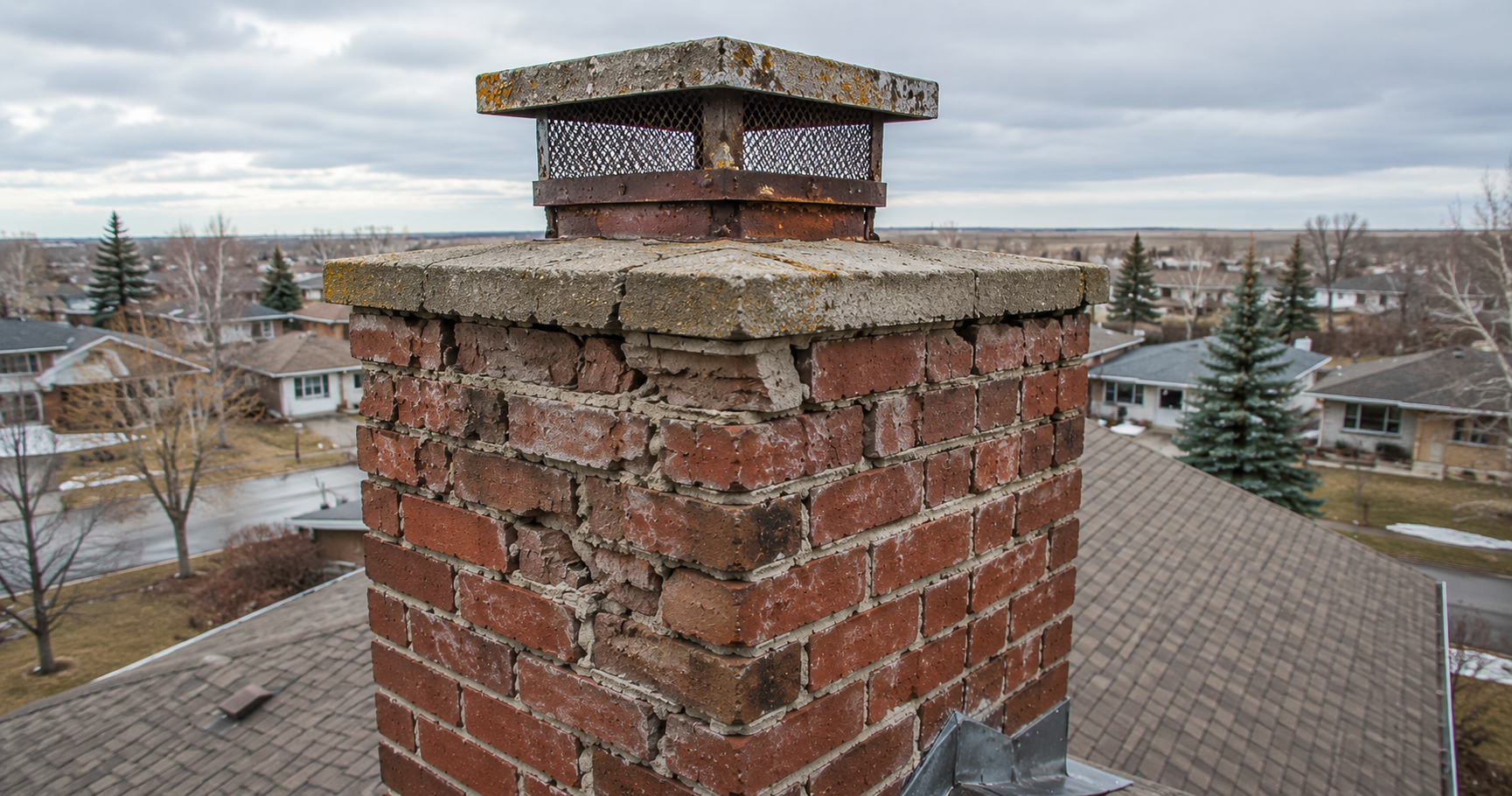
Your chimney is the most exposed masonry structure on your home — standing fully above the roofline, open to wind and snow on all four sides, and cycling between the intense heat of a fire below and Saskatchewan's brutal outdoor cold above. That combination is punishing. And in a climate like Regina's, small problems don't stay small.
Most chimney damage in this province traces back to two things: water infiltration and freeze-thaw cycles. When moisture seeps into tiny cracks in bricks, mortar, or the chimney crown, and the temperature then drops below zero, that water expands as it freezes — widening the crack slightly each time. Over a single Regina winter, with its many freeze-thaw swings, a hairline gap in a mortar joint can open into a significant structural problem.
This guide covers everything you need to know as a Regina homeowner: how winter damages your chimney, the common problems to watch for, a practical maintenance checklist, and the warning signs that mean it's time to call a professional.
How Cold Weather Damages Your Chimney
In most parts of Canada, chimneys take a seasonal beating — but Saskatchewan's climate is particularly hard on masonry. Freezing temperatures arrive early, stay late, and punctuate the entire winter with above-zero swings that put repeated stress on brick and mortar.
"In Regina, winter weather and freeze–thaw cycles are the main enemies of your chimney's brickwork and mortar. What looks like a surface crack in October can become a water infiltration problem by March."
— Regina Masonry ProfessionalsThe damage mechanism works in three stages. First, water from rain, snowmelt, or blowing snow enters any existing crack, porous mortar joint, or gap in the crown. Second, when temperatures drop overnight, that trapped water freezes and expands — pressing against the surrounding masonry from the inside. Third, when it thaws, the crack is fractionally larger, admits more water, and the cycle repeats. Dozens of these freeze-thaw events over a single winter add up to visible, measurable deterioration.
Beyond moisture, the chimney also experiences thermal cycling from within — the inside of the flue gets extremely hot when you have a fire, then cools rapidly when the fire dies down. This expansion and contraction, happening inside a cold masonry shell, puts stress on flue tiles, mortar joints, and any metal components like dampers and flashing.
Common Chimney Problems on Regina Homes
These are the issues chimney professionals see most frequently after Saskatchewan winters. Many start small and unnoticeable, but become structurally significant or fire-hazardous if left for another season.
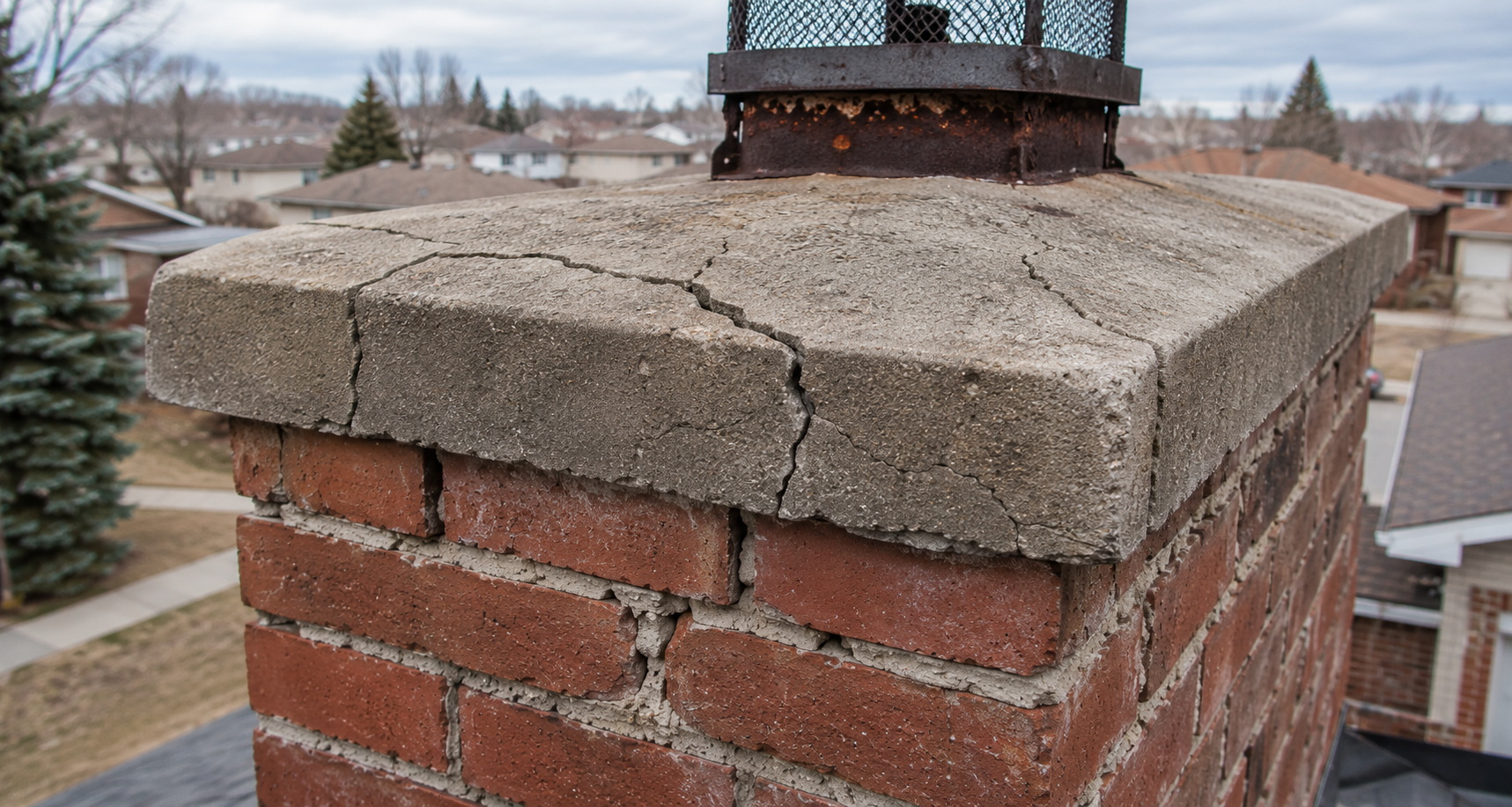
Spalling brick faces, crumbling mortar joints, and loose bricks on the chimney stack are a direct result of repeated freeze-thaw moisture damage. Missing or failing mortar around the crown and upper courses is a frequent and serious leak source.
The concrete crown — the sloped surface at the very top of the chimney — is the first line of defence against water entry. Cracks in the crown let water seep down into the chimney structure. A missing, broken, or undersized cap invites rain, snow, debris, and nesting animals directly into the flue.
Every wood-burning fire deposits some creosote — a tar-like, highly flammable residue — inside the flue. Cold chimneys and slow, smouldering fires increase buildup significantly. When deposits exceed about â…› inch in depth, the fire risk becomes serious and professional cleaning is essential.
When outdoor temperatures are very low, a column of dense cold air fills the flue — making it harder for smoke to rise and increasing downdraft. Debris, bird nests, or leaves partially blocking the top of the chimney compound the problem, trapping smoke and potentially carbon monoxide inside the home.
The metal flashing at the joint between your chimney and roof is vulnerable to temperature swings, wind, and the slight movement between two different structures. When flashing cracks, pulls away, or loses its seal, water tracks down behind the chimney and into your roof deck — often misdiagnosed as a roofing problem.
Water staining on ceilings or walls near the chimney, peeling paint or wallpaper in the fireplace room, damp smells inside the firebox, or rust on the damper all point to water successfully entering the chimney system — through the crown, flashing, mortar joints, or a damaged cap.
Understanding Creosote: Regina's Hidden Fire Hazard
For wood-burning fireplace and stove owners, creosote is the most serious and least-visible danger in your chimney system. It is produced whenever wood burns incompletely — whether from wet wood, low burn temperatures, restricted air supply, or a cold flue that causes smoke to cool and condense before exiting.
Saskatchewan homeowners who use their fireplace heavily during our long winters, or who burn softwoods or unseasoned wood to "take the edge off" on mild fall evenings, are at higher risk of problematic buildup. Creosote comes in three stages — and not all of them look alarming until the risk is already severe.
The solution is straightforward: burn only dry, seasoned hardwoods — oak, maple, ash, or birch — cured for at least 6–12 months. Keep fires burning hot enough to fully combust the wood rather than smouldering. And schedule a professional inspection and cleaning every year before the heating season begins, without exception.
Chimney Maintenance Checklist for Regina Homeowners
The best chimney care is proactive. A small annual investment in inspection and maintenance prevents the large, disruptive repairs that come from years of deferred attention. Use this checklist to stay on schedule.
When to Do What: Seasonal Chimney Care in Regina
Timing your chimney care to Regina's seasons makes every task more effective and more affordable. Here's the right approach for each phase of the year.
- Schedule annual inspection & cleaning
- Repair masonry, flashing & crown while temps allow
- Replace damaged cap or screen
- Check and clear flue of summer debris
- Stock up on seasoned firewood
- Burn only seasoned hardwood
- Watch for draft problems in very cold weather
- Keep CO & smoke detectors tested
- Monitor for unusual smoke, odours, or sounds
- Avoid overnight smouldering fires
- Inspect exterior for new cracks or spalling
- Check crown and cap for winter damage
- Look for efflorescence or damp spots inside
- Photograph and document damage
- Book masonry repairs for summer or fall
Safety Warning Signs You Should Never Ignore
Some chimney problems are inconvenient. Others are life-threatening. The following warning signs fall into the second category. If you observe any of these, stop using the fireplace immediately and call a chimney professional before the next fire.
- Smoke backing into the room, or difficulty establishing a draft even in mild weather
- Strong, persistent creosote or burning odours coming from the fireplace when it's not in use
- Popping, cracking, or roaring sounds inside the flue during a fire — a potential chimney fire in progress
- Extremely hot exterior chimney walls or a very hot flue pipe compared to normal operation
- Cracked, leaning, or visibly crumbling chimney bricks or stack after winter
- Loose bricks — especially on upper courses or the crown — that shift or sound hollow when tapped
- Water stains on ceilings or walls near the chimney, or persistent damp smell inside the firebox
- Rusted damper, warped metal components, or flue tiles visible from below that appear cracked
Carbon monoxide is colourless and odourless — it gives no warning before incapacitating you. A blocked or improperly drafting chimney can direct CO into living spaces without any visible smoke. This is why functional CO detectors on every level of your home are non-negotiable, and why chimney blockages and draft problems require immediate professional attention.
When to Call a Chimney Repair Professional in Regina
Chimney maintenance occupies a spectrum. At one end, there are DIY-appropriate tasks: cleaning the firebox, clearing visible cap debris, testing detectors, and trimming nearby branches. At the other end are jobs that require specialized tools, materials knowledge, and safety training.
Call a licensed masonry or chimney professional for:
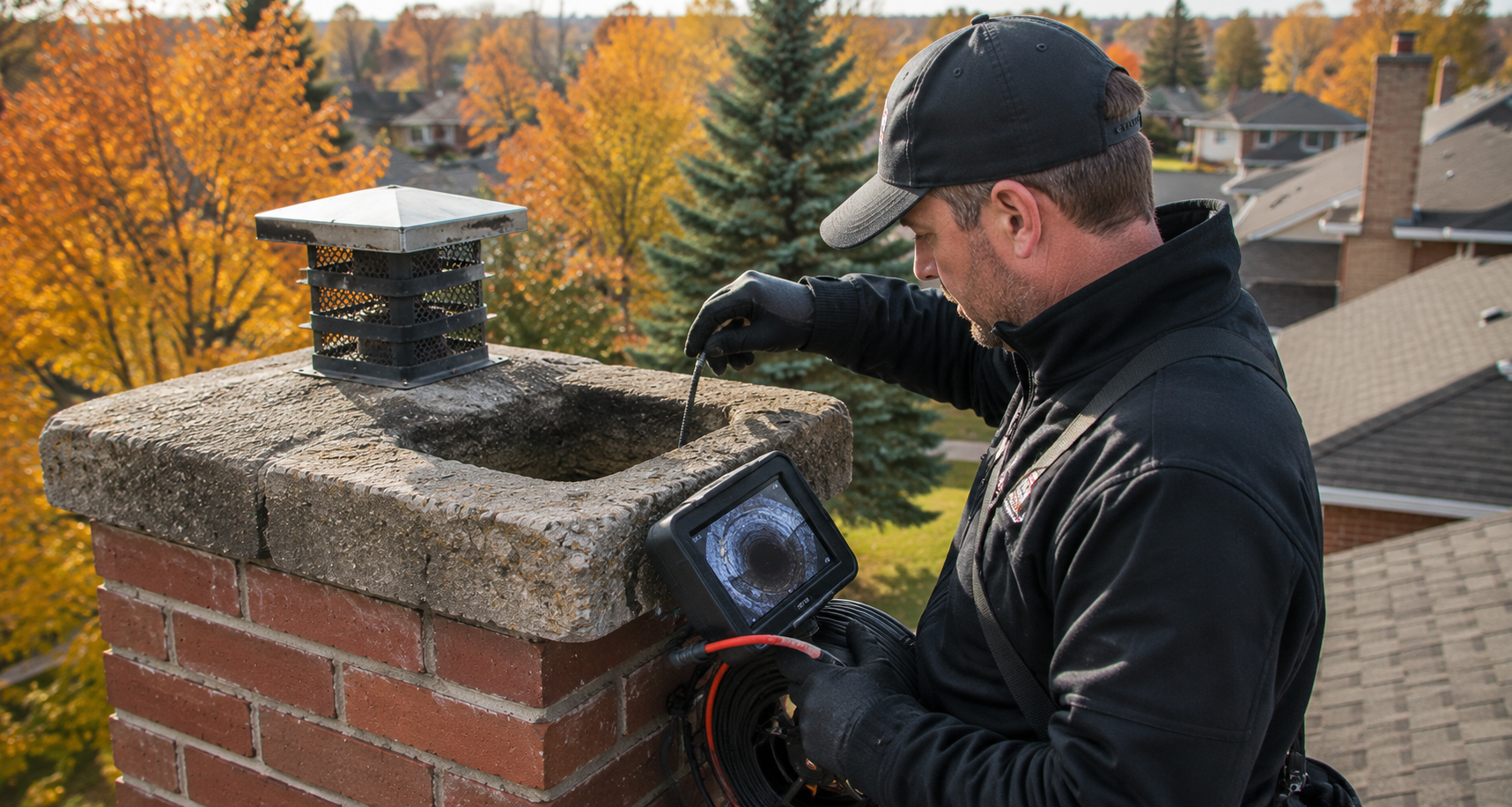
- Annual inspection and cleaning. A certified chimney sweep has camera equipment to inspect flue liners, the tools to measure creosote depth, and the training to identify structural issues that aren't visible from the firebox or rooftop without expertise.
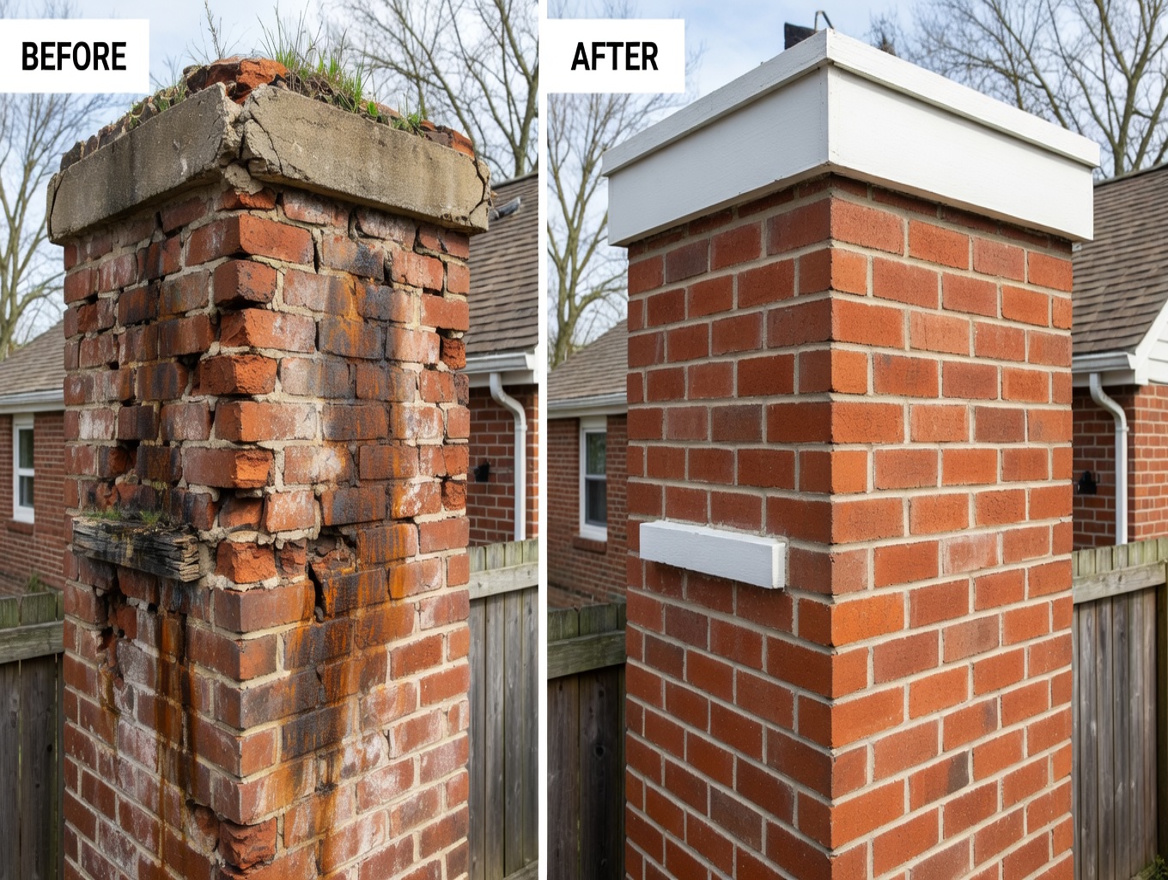
- Any masonry repair. Replacing damaged mortar joints, repairing or casting a new chimney crown, relaying loose or spalled brick, and tuckpointing requires the correct mortar formulation matched to your existing brick — the wrong mortar causes accelerated damage.
- Flashing replacement or re-sealing. The intersection of chimney and roof needs professional attention — improperly sealed flashing is one of the top sources of expensive water infiltration in Regina homes.
- Flue liner repair or relining. Cracked or deteriorated clay flue tiles, or the need to convert to a stainless steel liner, are jobs that require both engineering knowledge and specialized installation tools.
- Any safety concern listed above. If smoke is backing up, you suspect a chimney fire, or you have any doubt about CO safety, stop using the fireplace and call a professional before lighting another fire.
Frequently Asked Questions
Book Your Chimney Inspection Before Winter Returns
Our licensed masonry team handles everything from annual inspections and creosote cleaning to full crown replacement, repointing, and flashing repair — all with cold-climate expertise.
Book a Free Inspection → View Chimney Services